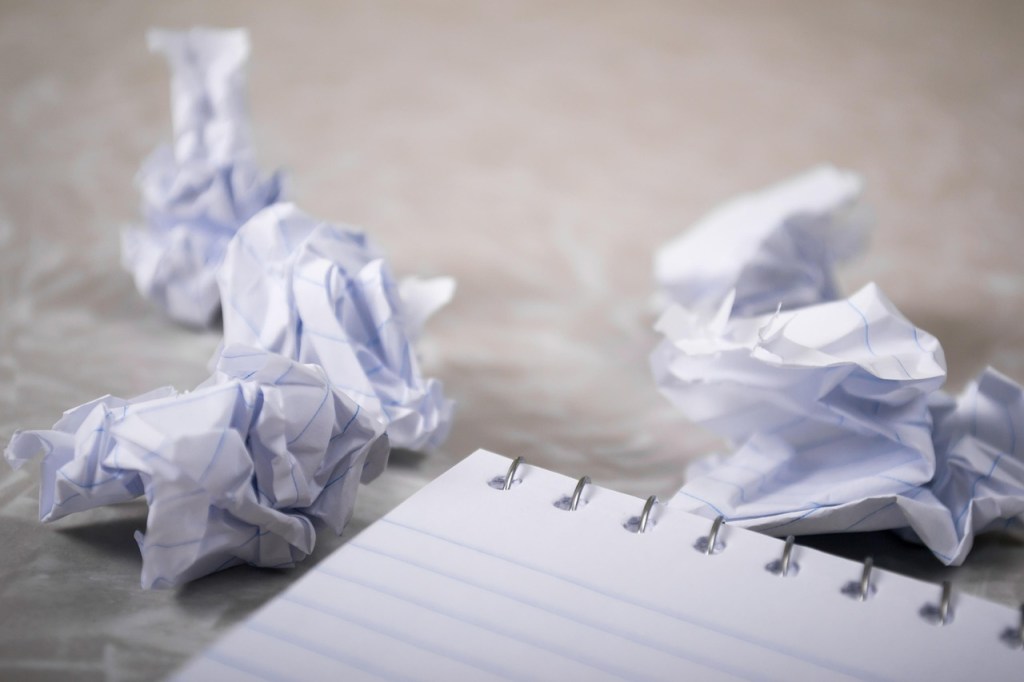
Every writer fears the first draft. It’s the daunting task of getting your ideas down on paper for the first time. The problem is that most people focus so much on getting it right the first time that they never really get their ideas off the ground. Believe me, I’m not immune to the feeling. But I also know that we don’t have to fear the first draft. Why? Well, let me tell you…
Why We Fear the First Draft
- The Tyranny of the Internal Critic: Every writer knows the feeling. You sit down, fingers poised over the keyboard, and before you even type a word, a chorus of doubts begins: ‘This isn’t original enough,’ ‘No one will want to red this,’ ‘What if it’s terrible?’ This isn’t just self-doubt; it’s your internal critic, a relentless editor who wants to perfect things before they even exist. It’s a natural part of the creative process, but it can be daunting.
- The Myth of Instant Genius: We often see the polished final products of our favorite authors and assume they were born fully formed. We forget the countless hours of drafting, revising, and agonizing that went into them. Social media, too, can paint a misleading picture, showcasing only success and perfection, making us feel like we’re falling behind if our initial attempts aren’t brilliant.
- Perfectionism as a Roadblock: Perfectionism, while seemingly a positive trait, can be the biggest enemy of forward momentum. If your standard for a first draft is ‘perfect,’ you’ll never start. The desire for flawlessness can lead to procrastination, endless outlining without writing, or abandoning projects altogether before they have a chance to breathe.
- The Pressure of the Blank Page: That blinking cursor on a blank screen can feel like a judgment, an empty canvas waiting for something magnificent. This pressure often stems from misunderstanding: the blank page isn’t demanding perfection; it’s inviting exploration.
The True Purpose of the First Draft
- It’s For Discovery, Not Delivery: Think of your first draft not as a finished product, but as a treasure map. You’re not drawing the final, detailed illustration of the treasure chest; you’re just sketching out the general directions and landmarks. It’s about getting your raw ideas onto the page, no matter how messy. This is where you discover what your story is, what your arguments are, or what your characters sound like.
- The Brain Dump: A first draft is fundamentally a ‘brain dump.’ It’s where you clear your head, externalize thoughts, and make space for more solid ideas to form. It’s the equivalent of scattering all your puzzle pieces on the table before you try to put them together.
- The Foundation, Not the House: Imagine building a house. You don’t start by painting the walls and hanging curtains. You lay the foundation, pour concrete, frame the structure. It’s rough, unappealing, and far from livable. But without that solid, albeit messy, foundation, the house can’t stand. Your first draft is that essential, unglamorous foundation.
- Permission to be Messy: Give yourself explicit permission to be messy, incoherent, and even contradictory. This isn’t about crafting beautiful prose; it’s about capturing fleeting thoughts, half-formed ideas, and the raw energy of your imagination before it evaporates.
Embracing the Bad
- The “Ugly First Draft” Mindset: Before you even start, tell yourself: ‘This is my ugly first draft. It’s supposed to be bad.’ This mental reframing is incredibly powerful. It takes the pressure off and frees you to simply write.
- Set a Timer and Sprint: Use the Pomodoro Technique or similar time-boxing. Set a timer for 20-30 minutes and commit to writing continuously until it rings. No stopping, no editing, no going back. The goal is pure output. When the timer goes off, you can take a break, knowing you’ve made progress.
- Turn Off Your Internal Editor (Ruthlessly): This is perhaps the hardest, but most crucial. As you write, ideas for better word choices, clearer sentences, or structural changes will pop into your head. Resist the urge to fix them now. Make a quick note in the margins or in brackets [fix this later] and keep going. Your editor can wait patiently in the wings.
- Quantity over Quality (Initially, Always): For your first draft, prioritize getting words on the page over making them perfect. Aim for a word count, or just filling a certain number of pages. The more material you generate, the more you’ll have to work with during revision.
- Freewriting and Brainstorming as Warm Ups: Before tackling your main project, try 5-10 minutes of freewriting. Just write whatever comes to mind, without judgment. This ‘clears the pipes’ and gets your creative juices flowing, making the transition to your main draft smoother.
- Write For Yourself First: Don’t write for your imagined audience during the first draft. Write for yourself. Explore your ideas, your voice, your story. The audience comes into play during revision.
- Don’t Look Back (Yet): Avoid rereading what you’ve just written, especially in the middle of a drafting session. Keep your eyes forward, focused on the next sentence, the next paragraph. Momentum is key.
The Unexpected Benefits
- Increased Productivity and Flow: When you remove the pressure of perfection, writing becomes less daunting. You’ll find yourself writing more consistently, getting into a ‘flow state’ more easily, and completing drafts faster than you ever thought possible.
- Discovering the Unexpected: Often, our best ideas emerge when we’re not trying too hard. By letting go and simply writing, you’ll surprise yourself with new plot points, character insights, or thematic connections that you wouldn’t have found if you were constantly censoring yourself.
- A Solid Foundation For Revision: A ‘bad’ first draft isn’t a failure; it’s a treasure trove of raw material. You can’t edit a blank page! With a draft, even a rough one, you have something tangible to work with. It’s much easier to refine, restructure, and polish existing words than to conjure them from nothing.
- Reduced Writer’s Block: The fear of the blank page and the internal critic are major contributors to writer’s block. By embracing the ‘bad’ first draft, you disarm these fears, making the writing process less intimidating and more accessible.
- Greater Creative Freedom: Knowing that your first attempt doesn’t have to be perfect liberates your creativity. You’ll be more willing to experiment, take risks, and explore unconventional ideas, leading to more original and compelling work.
- Building a Sustainable Writing Habit: This approach makes writing sustainable. It teaches you to show up at the page consistently, even on days when inspiration is low, by focusing on the process rather than immediate, flawless results.
The ‘bad’ first draft isn’t something to avoid; it’s something to celebrate. It’s the necessary, messy, and often exhilarating first step on the journey from an idea to a finished piece of writing. So next time you sit down to write, silence that internal critic, give yourself permission to be wonderfully imperfect, and discover the true power of your uninhibited first words.

 Serial Scribbles
Leave a comment